Introduction to CrewAI — What It Is and Why It Matters
Learn the basics of AI agents, what they are, and how they're changing the way we interact with technology.


These days, everyone's talking about AI agents. People are finding creative ways to use them in their daily work, from building chatbots for businesses to automating manual workflows.
Therefore, first let's see what are these AI agents:
AI agents are the software systems that use AI to achieve goals and complete the tasks on behalf of users. So, they can planning, reasoning, working with agents, maintain memory, using tools, making decisions autonomously and working with multimodal information like text, images, voice, video, audio, code.
So, now you probably have a good idea of what AI agents are capable of.
Now, you might be wondering how to actually build an AI agent system like this. Well, there are plenty of agent orchestration frameworks out there to help you do that.
So, here are some of the most popular agent orchestration frameworks out there.
| Framework | Description |
|---|---|
| CrewAI | Build collaborative, role-playing AI agents that work together on complex tasks. |
| LangChain | Popular open-source framework for chaining LLM calls and tools. Great for retrieval, agents, and reasoning workflows. |
| AutoGen (by Microsoft) | Multi-agent framework for automating complex conversations between LLMs and tools. |
| LlamaIndex | Focused on connecting LLMs with structured and unstructured data sources. Often used for RAG. |
| Semantic Kernel (by Microsoft) | .NET and Python framework for integrating LLMs into existing systems. |
| Haystack (by deepset) | Framework for retrieval-augmented generation and knowledge-based agents. |
| OpenDevin / CAMEL / BabyAGI | Research-focused frameworks for autonomous and goal-oriented agents. |
Now, you might be a bit confused about what agent orchestration actually means. In simple terms,
A single AI model or agent can handle simple tasks like summarizing a paragraph, but it struggles with more complex problems, such as researching a topic, gathering data, and then summarizing the findings for the user. That's where AI agent orchestration comes in. It helps manage complex workflows by allowing multiple AI agents to work together efficiently, ensuring that sophisticated tasks run smoothly from start to finish.
Now, this is where CrewAI comes into the picture. Simply put, this framework helps you build AI agent systems with ease. But before we dive deeper, let's break down the name itself.
What does Crew actually mean? A group of people working together on a common activity.
So, in CrewAI, you can create crews and each crew is made up of multiple AI agents working together to accomplish a goal.
Let me explain this with a simple, real-world example.
There is a content production company. There are three teams in the company.
1. Research team
Goal: Find trending topics and gather insights.
- Trend Researcher — finds trending topics on tech/business.
- Data Analyst — summarizes insights and stats.
2. Writing team
Goal: Take research results → write a blog post.
- Content Writer — drafts the blog.
- Editor — polish it for clarity and SEO.
3. Marketing team
Goal: Use the blog post → create promotional content.
- Social Media Manager — writes a tweet and LinkedIn post.
- Email Marketer — writes a short newsletter summary.
How They Work Together
The research team runs first → produces a "research summary."
The writing team receives that summary → creates an article.
The marketing team takes the article → produces marketing content.
So, that's how the production process works. Now, let's align this scenario with a CrewAI example.
Crew 1 — Research Crew
Goal: Find trending topics and gather insights.
Agents inside Crew 1:
- Trend Researcher — finds trending topics on tech/business.
- Data Analyst — summarizes insights and stats.
Crew 2 — Writing Crew
Goal: Take research results → write a blog post.
Agents inside Crew 2:
- Content Writer — drafts the blog.
- Editor — polish it for clarity and SEO.
Input: Research Crew's summary. Output: A complete blog article.
Crew 3 — Marketing Crew
Goal: Use the blog post → create promotional content.
Agents inside Crew 3:
- Social Media Manager — writes a tweet and LinkedIn post.
- Email Marketer — writes a short newsletter summary.
Input: Blog article from Crew 2. Output: Final marketing assets.
How They Work Together
Crew 1 (Research Crew) runs first → produces "research summary."
Crew 2 (Writing Crew) receives that summary → creates an article.
Crew 3 (Marketing Crew) takes the article → produces marketing content.
So, I hope you now have a clear idea of how the CrewAI framework works. In CrewAI, a crew consists of multiple agents that work together toward a shared goal. And just like agents collaborate within a crew, multiple crews can also work together to achieve even more complex objectives.
So, what do you think about this framework? Just imagine the kinds of complex problems we can solve using an AI orchestration framework like CrewAI.
I'll see you in the next article, where we'll dive into some hands-on coding examples!
Part of the CrewAI Series series
View all partsRelated Posts
- 10 min read
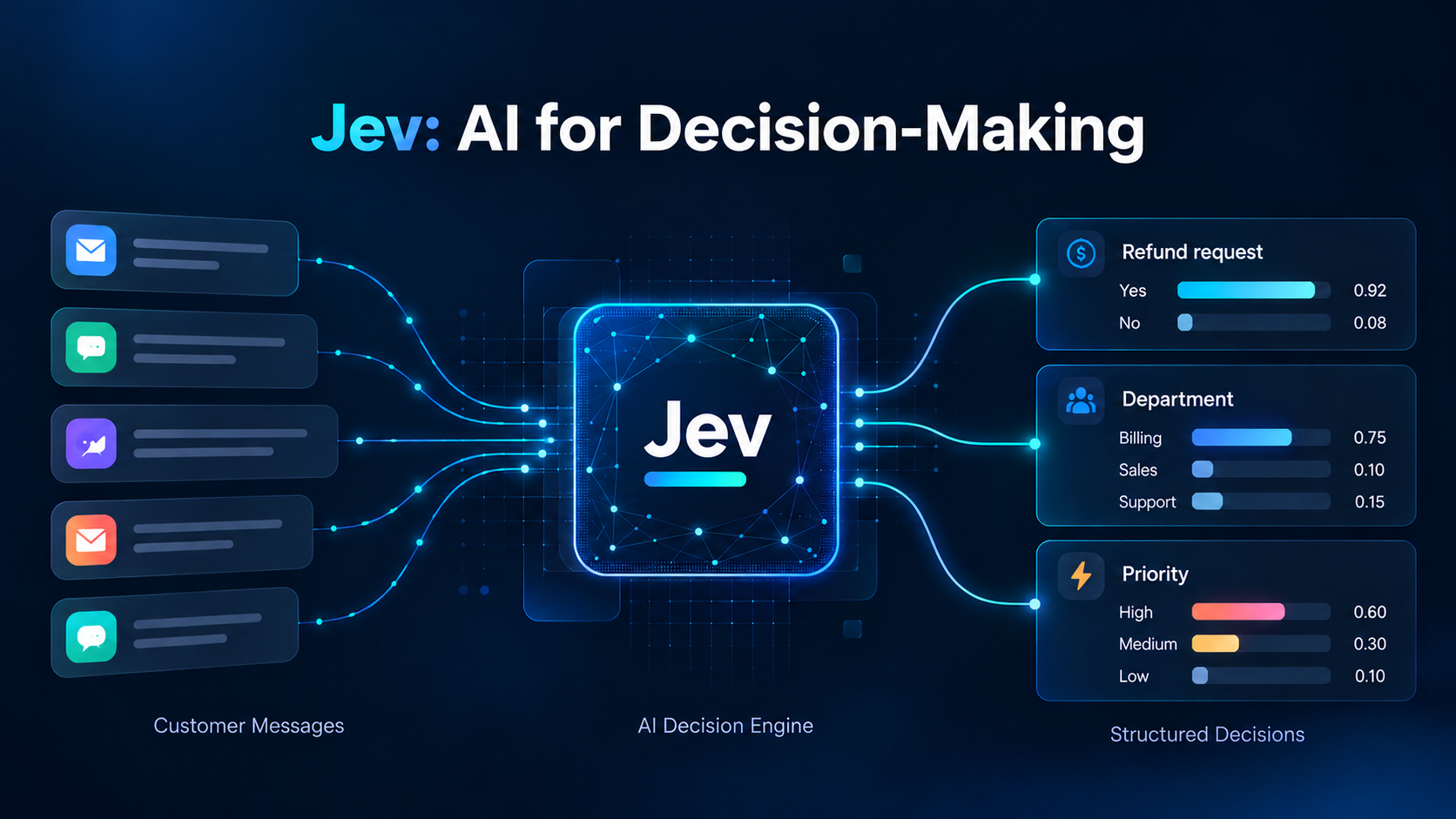
The AI Doesn't Talk. It Decides.
An introduction to Jev, a decision-focused AI model by TypeSafe AI, explaining how it returns structured decisions with calibrated probabilities, where it can be used, and how it compares to traditional LLMs.
AIJevLLM - 5 min read
Building Your First Collaborative AI Crew
Learn the basics of AI agents, what they are, and how they're changing the way we interact with technology.
AIAI AgentsAutomation - 4 min read
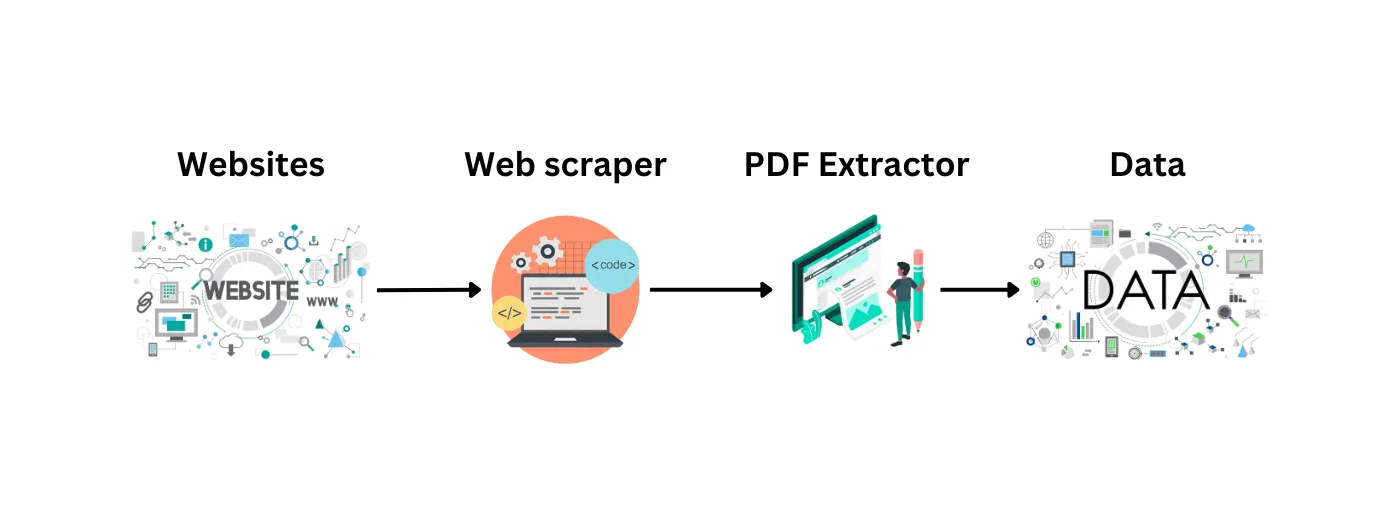
Advanced Web Scraping: Extracting Data from PDFs Without Downloading
Master advanced web scraping by extracting data directly from online PDFs - no downloads, no hassle, just instant insights!
web scraping with pythonadvanced web scraping guideAutomation